| |
 |
| |
|
| |
 |
| |
Click on images to enlarge |
| |
|
Long Island University –
Brooklyn Campus
Schwartz Athletic Center
(originally the Paramount Theatre)
385 Flatbush Avenue Extension at DeKalb Avenue
Brooklyn, N.Y. 11201
http://www.brooklyn.liu.edu
The Arnold and Marie Schwartz Athletic Center of Long Island University's Brooklyn Campus was originally built in 1928 as the Brooklyn Paramount Building. Located on the northeast corner of Flatbush Avenue Extension and DeKalb Avenue, the area was in Brooklyn's once-thriving theatre district. With the opening of the Paramount, there were an estimated 25,000 seats within a few blocks.
As designed by noted theatre architects Rapp & Rapp of Chicago, the buff-colored brick Brooklyn Paramount building combined an eleven-story office tower at the corner with a large auditorium adjacent to the east. On the roof over the offices were two enormous "PARAMOUNT THEATRE" signs, and on the sides above the wraparound marquee were two very large vertical signs. Patrons entered through a low-ceilinged lobby in the office tower that led into the Grand Foyer — a giant, mirrored rectangular space 147 feet long and 42 feet high — that in turn led to the auditorium and various lounges. The rococo-style auditorium had 4,124 seats upholstered in varying shades of burgundy, a great latticed ceiling (painted sky-blue with clouds), and arches along the side walls that were originally festooned with artificial foliage. Golden staircases extended from the organ grilles to the stage for entrances by chorus girls and stars alike. Throughout the auditorium were hidden fixtures of the Wilfred Color Organ, an elaborate lighting system that allowed the auditorium to be illuminated according to the mood of the moment. The 60-foot stage curtains were decorated with satin embroidered pheasants and in the lobby were huge chandeliers and fountains with goldfish. It was reported that Paramount Publix spent nearly $3 million for sculpture, paintings, tapestries, and other items. Advertised as "Paramount-Publix's Gift to Brooklyn," the Brooklyn Paramount had its grand opening on November 24, 1928. On the program were "Manhattan Cocktail," a Paramount film starring Nancy Carroll, and "Stars," a spectacular stage revue produced by the legendary John Murray Anderson. The Brooklyn Paramount was the first theatre designed for talking pictures, or movies with sound. In addition to motion pictures, the Paramount also offered great vaudeville performers, and later, major stars such as Bing Crosby and Ethel Merman.
During the Depression years, movie theatres struggled financially, and the Paramount was no exception. In 1935, the Paramount Building was sold to Simon Fabian, who had been leasing the property. The New York Times noted in 1936 that the Paramount had lost $1.5 million since its opening.
In 1950, the Paramount building was sold to Long Island University, which gradually converted the upper floors into college administrative offices, but the auditorium continued to function as a theatre venue for another decade. It was during the 1950s that the Paramount created a sensation with Alan Freed’s famous Rock ‘n’ Roll show with Chuck Berry, Fats Domino and others musical stars. The Paramount was also a center for jazz in New York. Duke Ellington, Charlie Parker, Ella Fitzgerald and Miles Davis are just some of the legends that performed on the stage.
After the Paramount closed for the last time in August 21, 1962, the auditorium was converted into a basketball court for LIU's Blackbirds teams, opening on November 30, 1963. A second renovation and expansion of the gymnasium took place in the summer of 1975. The building is now called the Arnold and Marie Schwartz Athletic Center. In January 2006, the Blackbirds moved to the 17,000-seat arena in the $40 million Wellness, Recreation and Athletic Center, and the Schwartz basketball court is now used as a 1200-seat multi-purpose arena.
In recent years, the gymnasium has been elegantly decorated and cosmetically revived for dinners to raise funds for scholarships. Much of the theatre’s decor is intact in its legendary auditorium and magnificent lobby. |
| |
|
|
|
|
|
|
Wurlitzer Organ Company
North Tonawanda, N.Y. – Opus 1984 (1928)
Electro-pneumatic action
Style Publix 4
4 manuals, 26 ranks, 8 tuned percussion, 9 traps
4-manual main console, 4-manual slave console
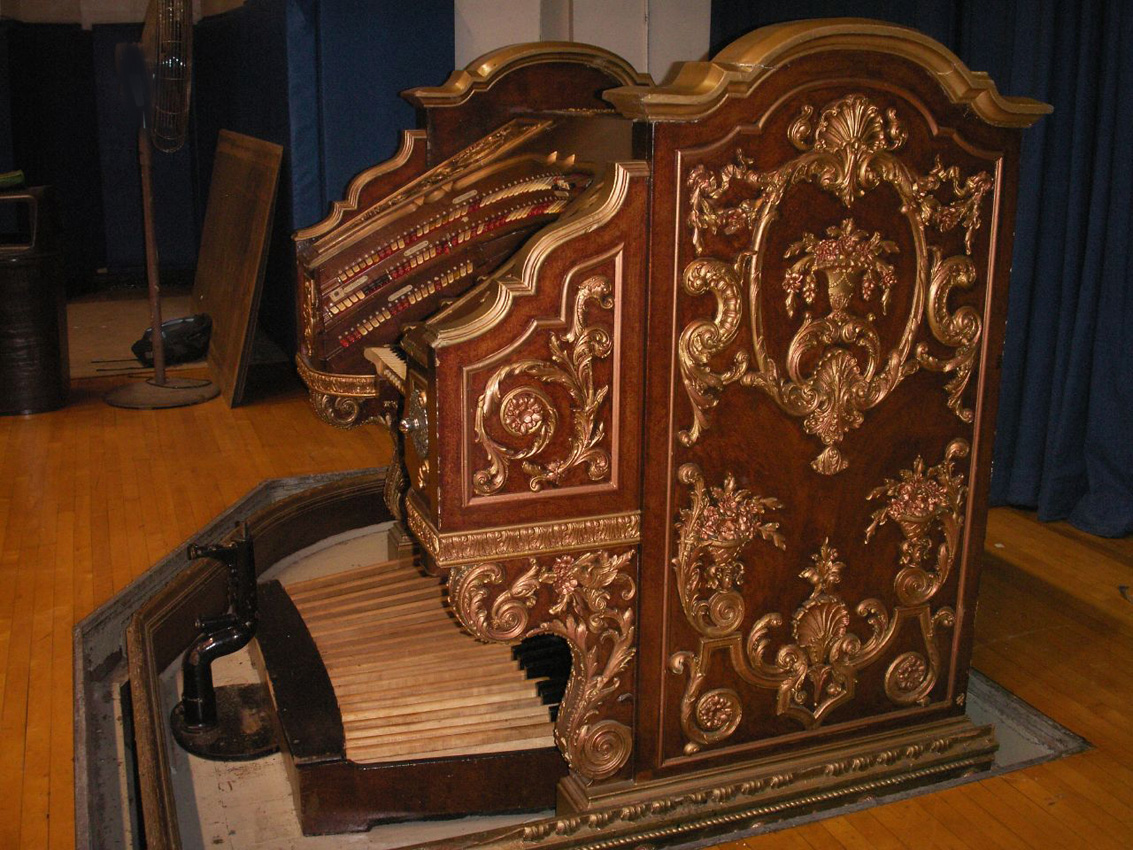
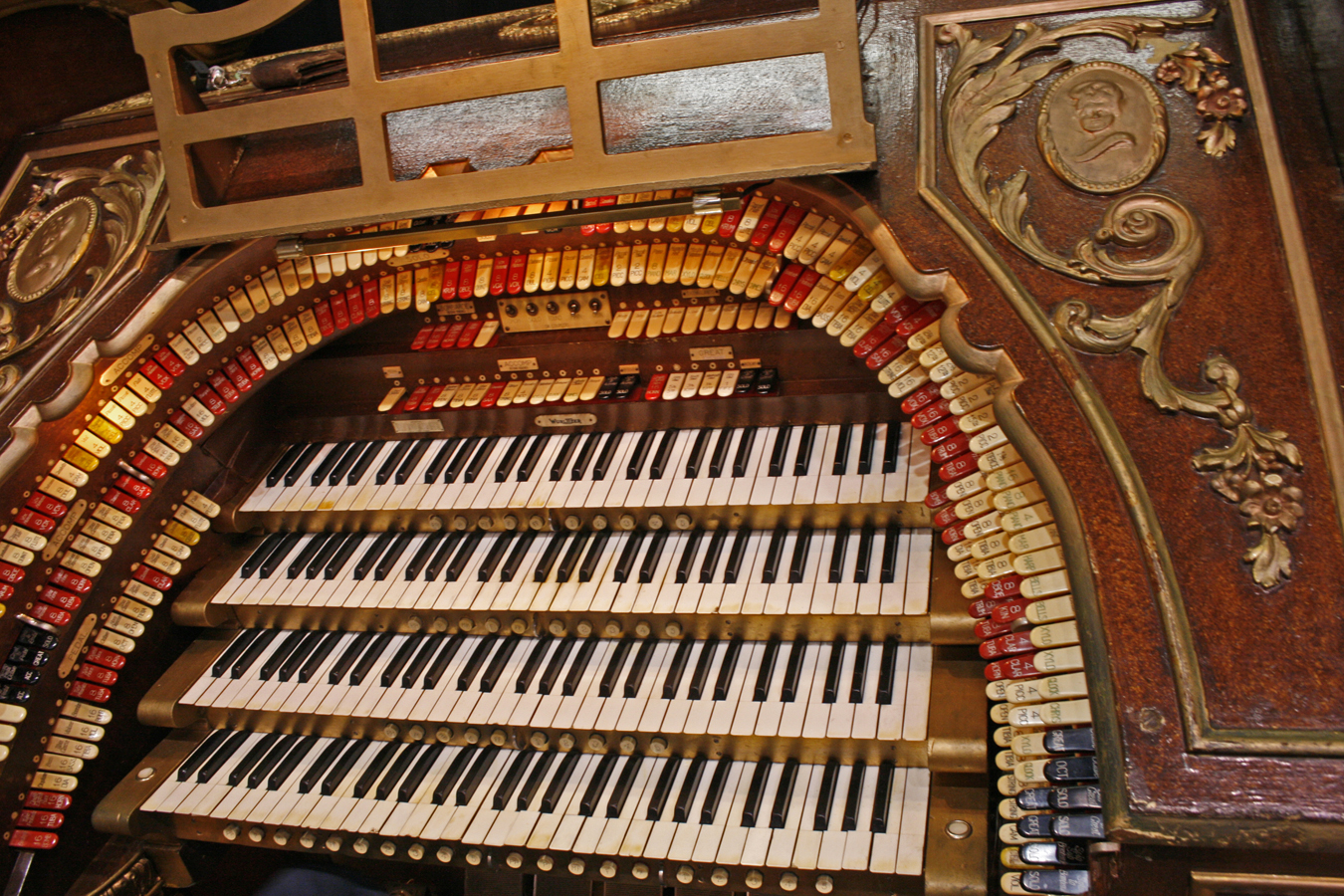
The organ in the Schwartz Athletic Center was built in 1928 by the Wurlitzer Organ Company for the Brooklyn Paramount Theatre. Known by Wurlitzer as a "Publix 4" style, its specification of four manuals and 26 ranks was designed to produce the same tonal effect as the 4/36 Wurlitzer in the Times Square Paramount, but at lower cost. The Brooklyn Paramount organ was the first of only two "Publix 4" instruments built, the other going to the Metropolitan ("Met") Theatre, Boston (1930, Op. 2101). While the Boston Met's organ was broken up for parts in the 1970s, the Brooklyn Paramount organ remains unaltered and is still operational.
A total of 257 stops control more than 2,000 pipes to imitate a variety of sounds — a brass band, percussion instruments, piano, train whistles, bird calls, horse hoofs, etc. — enabling the organist to accompany a movie and provide popular music between features. The pipes and percussions are located in four chambers, two each flanking the proscenium. As originally installed, the organ had one console, located on its own lift on the left end of the orchestra pit and extant today. At some point, a second, nearly identical "slave" console was installed on the right side of the pit; it could also be moved on-stage when desired. The slave console was later moved to DeKalb, Illinois.
Since the more than 4,000 plush theatre seats and carpeting were removed and replaced by bleachers and a hardwood gym floor, the auditorium has gained a very reverberant acoustic. As a result, the Wurlitzer organ is now heard with an incomparable "mighty" sound in this unique environment. For many years the organ has been maintained by a crew of the New York Theatre Organ Society.
Click here to hear a mid-1970s recording of Billy Nalle (1921-2005) playing Jerome Kern's "Who?" on the Brooklyn Paramount organ. |
| |
|
|
|
|
|
|
Pedal – 32 notes
|
16 |
|
Bombarde |
|
8 |
|
Gamba |
16 |
|
Tuba Profunda |
|
8 |
|
Cello |
16 |
|
Double English Horn |
|
8 |
|
Flute |
16 |
|
Diaphone |
|
4 |
|
Flute |
16 |
|
Bass |
|
16 |
|
Piano |
16 |
|
Tibia Clausa (S) |
|
|
|
Bass Drum |
16 |
|
Violone |
|
|
|
Kettle Drum |
16 |
|
Bourdon |
|
|
|
Snare Drum |
8 |
|
Tuba Mirabilis |
|
|
|
Crash Cymbal |
8 |
|
Tuba Horn |
|
|
|
Cymbal |
8 |
|
English Horn |
|
|
|
Accomp. to Pedal |
8 |
|
Octave |
|
|
|
Great to Pedal |
8 |
|
Horn Diapason |
|
|
|
Solo to Pedal |
8 |
|
Tibia Clausa (S) |
|
|
|
|
8 |
|
Clarinet |
|
Pedal Pizzicato |
8 |
|
Saxophone |
|
16 |
|
Bombarde |
8 |
|
Solo Strings |
|
|
|
|
| |
|
|
|
|
|
|
Accompaniment (Manual I) – 61 notes
|
8 |
|
Tuba Mirabilis |
|
2 |
|
Piccolo (M) |
8 |
|
Tuba Horn |
|
8 |
|
Piano |
8 |
|
English Horn |
|
|
|
Marimba (re-it) |
8 |
|
Diaphonic Diapason |
|
|
|
Harp |
8 |
|
Horn Diapason |
|
|
|
Chrysoglott |
8 |
|
Tibia Clausa (F) |
|
|
|
Vibraphone |
8 |
|
Tibia Clausa (S) |
|
|
|
Chrysoglott Damper |
8 |
|
Clarinet |
|
|
|
Snare Drum |
8 |
|
Saxophone |
|
|
|
Tamborine |
8 |
|
Solo String I |
|
|
|
Castanet |
8 |
|
Solo String II |
|
|
|
Chinese Block |
8 |
|
Gamba |
|
|
|
Tom Tom |
8 |
|
Gamba Celeste |
|
|
|
Sand Block |
8 |
|
Viol d'Orchestre |
|
|
|
Octave |
8 |
|
Viol Celeste |
|
|
|
Solo to Accomp. |
8 |
|
Krumet |
|
|
|
Great Octave to Accomp. |
8 |
|
Oboe Horn |
|
|
|
|
8 |
|
Quintadena |
|
Accompaniment 2nd Touch |
8 |
|
Flute |
|
8 |
|
Tuba Mirabilis |
8 |
|
Vox Humana (M) |
|
8 |
|
Tuba Horn |
8 |
|
Vox Humana (S) |
|
8 |
|
Diaphonic Diapason |
8 |
|
Dulciana |
|
8 |
|
Tibia Clausa |
4 |
|
Gambette |
|
8 |
|
Tibia Clausa |
4 |
|
Gambette Celeste |
|
8 |
|
Saxophone |
4 |
|
Viol |
|
8 |
|
Strings II |
4 |
|
Octave Celeste |
|
4 |
|
Piccolos II |
4 |
|
Piccolo (F) |
|
|
|
Xylophone (re-it) |
4 |
|
Piccolo (S) |
|
|
|
Glockenspiel |
4 |
|
Flute |
|
|
|
Cathedral Chimes |
4 |
|
Vox Humana (M) |
|
|
|
Triangle |
4 |
|
Vox Humana (S) |
|
|
|
Solo to Accomp. |
2 2/3 |
|
Twelfth |
|
|
|
Solo to Accomp. – Pizzicato |
| |
|
|
|
|
|
|
Great (Manual II) – 61 notes
|
16 |
|
Bombarde |
|
4 |
|
Viol |
16 |
|
Tuba Profunda |
|
4 |
|
Octave Celeste |
16 |
|
Diaphone |
|
4 |
|
Flute |
16 |
|
Bass |
|
4 |
|
Vox Humana (M) |
16 |
|
Tibia Clausa (TC) (F) |
|
4 |
|
Vox Humana (S) |
16 |
|
Tibia Clausa (S) |
|
2 2/3 |
|
Twelfth (Tibia) (F) |
16 |
|
Clarinet (TC) |
|
2 2/3 |
|
Twelfth (Tibia) (S) |
16 |
|
Saxophone (TC) |
|
2 2/3 |
|
Twelfth (M) |
16 |
|
Solo Strings II (TC) |
|
2 |
|
Piccolo (Tibia) (F) |
16 |
|
Violone |
|
2 |
|
Piccolo (Tibia) (S) |
16 |
|
Vox Humana (TC) |
|
2 |
|
Fifteenth (M) |
16 |
|
Vox Humana (TC) |
|
2 |
|
Piccolo (M) |
8 |
|
Tuba Mirabilis |
|
1 3/5 |
|
Tierce |
8 |
|
Trumpet |
|
16 |
|
Piano |
8 |
|
Tuba Horn |
|
8 |
|
Piano |
8 |
|
Diaphonic Diapason |
|
4 |
|
Piano |
8 |
|
Open Diapason |
|
|
|
Marimba (re-it) |
8 |
|
Horn Diapason |
|
|
|
Harp |
8 |
|
Tibia Clausa (F) |
|
|
|
Orchestra Bells (re-it) |
8 |
|
Tibia Clausa (S) |
|
|
|
Sleigh Bells |
8 |
|
Orchestral Oboe |
|
|
|
Master Xylophone |
8 |
|
Kinura |
|
|
|
Xylophone |
8 |
|
Clarinet |
|
|
|
Glockenspiel |
8 |
|
Saxophone |
|
|
|
Chrysoglott |
8 |
|
Solo String I |
|
|
|
Cathedral Chimes |
8 |
|
Solo String II |
|
|
|
Sub Octave |
8 |
|
Gamba |
|
|
|
Solo Sub Octave to Great |
8 |
|
Gamba Celeste |
|
|
|
Solo to Great |
8 |
|
Viol d'Orchestre |
|
|
|
|
8 |
|
Viol Celeste |
|
Great 2nd Touch |
8 |
|
Krumet |
|
16 |
|
Bombarde |
8 |
|
Flute |
|
16 |
|
Tuba Profunda |
8 |
|
Vox Humana (M) |
|
16 |
|
Double English Horn |
8 |
|
Vox Humana (S) |
|
16 |
|
Tibia Clausa (TC) |
4 |
|
Piccolo (F) |
|
8 |
|
Tibia Clausa |
4 |
|
Piccolo (S) |
|
|
|
Solo to Great |
4 |
|
Gambette |
|
|
|
Solo to Great – Pizzicato |
4 |
|
Gambette Celeste |
|
|
|
|
| |
|
|
|
|
|
|
Bombarde (Manual III) – 61 notes
|
16 |
|
Bombarde |
|
8 |
|
Flute |
16 |
|
Tuba Profunda |
|
4 |
|
Clarion Mirabilis (S) |
16 |
|
Double English Horn |
|
4 |
|
Clarion (M) |
16 |
|
Diaphone |
|
4 |
|
Piccolo (F) |
16 |
|
Tibia Clausa (TC) (F) |
|
4 |
|
Piccolo (S) |
16 |
|
Tibia Clausa (S) |
|
|
|
Master Xylophone |
8 |
|
Trumpet |
|
|
|
Glockenspiel |
8 |
|
Tuba Mirabilis |
|
|
|
Snare Drum |
8 |
|
Tuba Horn |
|
|
|
Great to Bombarde |
8 |
|
English Horn |
|
|
|
Solo Sub Octave to Bombarde |
8 |
|
Diaphonic Diapason |
|
|
|
Solo to Bombarde |
8 |
|
Open Diapason |
|
|
|
|
8 |
|
Tibia Clausa (F) |
|
Bombarde 2nd Touch |
8 |
|
Tibia Clausa (S) |
|
16 |
|
Bombarde |
8 |
|
Solo String I |
|
16 |
|
Tuba Profunda |
8 |
|
Solo String II |
|
16 |
|
Double English Horn |
8 |
|
Gamba |
|
8 |
|
Tuba Horn |
8 |
|
Gamba Celeste |
|
8 |
|
Tibia Clausa (F) |
8 |
|
Viol d'Orchestre |
|
|
|
|
8 |
|
Viol Celeste |
|
|
| |
|
|
|
|
|
|
Solo (Manual IV) – 61 notes
|
16 |
|
Bombarde |
|
8 |
|
Gamba |
16 |
|
Tibia Clausa (TC) (F) |
|
8 |
|
Gamba Celeste |
16 |
|
Tibia Clausa (S) |
|
8 |
|
Krumet |
16 |
|
Saxophone (TC) |
|
8 |
|
Oboe Horn |
16 |
|
Violone |
|
8 |
|
Quintadena |
8 |
|
Trumpet |
|
8 |
|
Vox Humana (M) |
8 |
|
Tuba Mirabilis |
|
8 |
|
Vox Humana (S) |
8 |
|
Tuba Horn |
|
4 |
|
Piccolo (F) |
8 |
|
English Horn |
|
4 |
|
Piccolo (S) |
8 |
|
Diaphonic Diapason |
|
4 |
|
Gambette |
8 |
|
Open Diapason |
|
2 |
|
Gambette Celeste |
8 |
|
Tibia Clausa (F) |
|
2 |
|
Piccolo (Tibia) (F) |
8 |
|
Tibia Clausa (S) |
|
2 |
|
Piccolo (Tibia) (S) |
8 |
|
Orchestral Oboe |
|
8 |
|
Piano |
8 |
|
Kinura |
|
|
|
Marimba |
8 |
|
Clarinet |
|
|
|
Master Xylophone |
8 |
|
Saxophone |
|
|
|
Glockenspiel |
8 |
|
Solo String I |
|
|
|
Orchestral Bells (re-it) |
8 |
|
Solo String II |
|
|
|
Chrysoglott |
| |
|
|
|
|
|
Cathedral Chimes |
| |
|
|
|
|
|
|
Adjustable Combination Pistons
|
| |
|
| Pedal |
PP–P–MF–F–FF–1–2–3–4–5 |
|
| Accompaniment |
PP–P–MF–F–FF–1–2–3–4–5 |
|
| Great |
PP–P–MF–F–FF–1–2–3–4–5 |
Great 2nd Touch adds Pedal Stops |
| Bombarde |
PP–P–MF–F–FF–1–2–3–4–5 |
|
| Solo |
PP–P–MF–F–FF–1–2–3–4–5 |
|
|
| |
|
|
|
|
|
|
Tremulants
|
| |
|
Main |
|
|
|
Tibia Clausa (F) |
| |
|
Tuba (M) |
|
|
|
Tuba Mirabilis (S) |
| |
|
Vox Humana (M) |
|
|
|
Vox Humana (S) |
| |
|
Orchestral |
|
|
|
Foundation |
| |
|
Solo |
|
|
|
Tibia Clausa (S) |
| |
|
|
|
|
|
|
General
|
| |
|
Balanced Pedal – Orchestral |
|
Five Shutter Couplers: |
| |
|
Balanced Pedal – Solo |
|
(ORCH SOLO FOUN MAIN GEN) |
| |
|
Balanced Pedal – Foundation |
|
Thunder Pedal (Diaphone) |
| |
|
Balanced Pedal – Main |
|
Thunder Pedal (Reed) |
| |
|
Balanced Pedal – General |
|
1st & 2nd Touch Traps Switch |
| |
|
Balanced Pedal – Crescendo |
|
|
| |
|
|
|
|
|
|
Push Buttons
|
| |
|
| Auto Horn |
Horse Hoofs |
Bird |
| Fire Gong |
Machine Gun |
Door Bell |
| Steamboat Whistle |
|
|
|
| |
|
|
|
|
|
|
STOP & CHAMBER ANALYSIS |
FOUNDATION CHAMBER
(Left Side, Top –
15" pressure) |
16 |
|
Diaphonic Diapason |
73 pipes |
8 |
|
Tibia Clausa |
85 pipes |
16 |
|
Gamba |
85 pipes |
8 |
|
Gamba Celeste |
73 pipes |
|
MAIN CHAMBER
(Left Side, Bottom –
10" press. unless noted) |
16 |
|
Tuba Horn [15"] |
85 pipes |
8 |
|
Viol d'Orchestre |
85 pipes |
8 |
|
Viol Celeste |
73 pipes |
8 |
|
Clarinet |
61 pipes |
8 |
|
Vox Humana [6"] |
61 pipes |
16 |
|
Flute |
97 pipes |
8 |
|
Dulciana |
61 pipes |
| |
|
Chrysoglott |
49 notes |
| |
|
(with Vibraphone Action) |
|
|
|
SOLO CHAMBER
(Right Side, Top –
15" pressure unless noted) |
16 |
|
Tuba Mirablis |
85 pipes |
16 |
|
English Horn |
73 pipes |
8 |
|
Open Diapason [10"] |
61 pipes |
16 |
|
Tibia Clausa |
97 pipes |
8 |
|
Vox Humana [6"] |
61 pipes |
| |
|
Glockenspiel |
37 notes |
| |
|
Xylophone (Small Re-It) |
37 notes |
| |
|
Sleigh Bells |
25 notes |
| |
|
Cathedral Chimes |
25 notes |
| |
|
Toy Counter & Traps |
|
|
ORCHESTRAL CHAMBER
(Right Side, Bottom –
10" pressure) |
8 |
|
Trumpet |
61 pipes |
16 |
|
Horn Diapason |
73 pipes |
8 |
|
Orchestral Oboe |
61 pipes |
8 |
|
Kinura |
61 pipes |
8 |
|
Saxophone |
61 pipes |
8 |
|
String #1 |
61 pipes |
8 |
|
String #2 |
61 pipes |
8 |
|
Krumet |
61 pipes |
8 |
|
Oboe Horn |
61 pipes |
8 |
|
Quintadena |
61 pipes |
| |
|
Marimba |
49 notes |
| |
|
Master Xylophone (Single) |
37 notes |
| |
|
Piano (Wurlitzer Upright) |
85 notes |
|
|
|
| |
|
|
|
|
|
|
|
|
|
Factory photo of Main Console |
|
Slave console |
|
|
|
| |
|
|
|
|
|
|
Sources:
"Brooklyn Paramount Opening," The New York Times (Oct. 7, 1928).
"Brooklyn Paramount Theatre Building Sold to Simon Fabian, Present Lessee," The New York Times (Feb. 28, 1935).
Cinema Treasures website: http://cinematreasures.org/theaters/618
Gray, Christopher. "Streetscapes: The Brooklyn Paramount; Once a Rococo Palace, Now a Citadel of Learning," The New York Times (July 31, 1994).
Junchen, David L., comp. and ed. by Jeff Weiler. The WurliTzer Pipe Organ – An Illustrated History. Indianapolis: The American Theatre Organ Society, 2005.
New York Theatre Organ Society website: http://www.nytos.org/brooklyn-paramount
The Theatre Organ Home Page website: http://theatreorgans.com/index.html Specifications
of Wurlitzer Organ Co. Style "Publix 4 ."
Theatre Historical Society Readerboard website: http://theatrehistoricalsociety.wordpress.com
Walker, Bob. Specifications (May 26, 1972) of Wurlitzer organ, Op. 1984 (1928). Courtesy N.Y.T.O.S.
Illustrations:
Cinema Treasures website. Exterior (c.1928).
Flavorwire website: http://flavorwire.com.
Interior. Courtesy Yves Marchand and Romain Meffre.
Lawson, Steven E. Exterior; Wurlitzer Organ console (front & closeup); altered by Sebastian M. Glück.
New York Theatre Organ Society website: www.nytos.org.
Wurlitzer Organ console (side view).
Theatre Historical Society. Interior (c.1928).
Wurlitzer Organ Company factory photos of main and slave consoles. Courtesy Jeff Weiler. |
|
| |
|
|
|
|
|
|
|
|